Food truck websites, done right.
Live schedules, mobile menus, catering forms, and honest pricing. Straight answers to the questions every food truck owner asks before building a site.
Essentials
The 6 things a food truck site actually needs.
Live weekly schedule
One block on the homepage you can edit from your phone. Customers see today's stop without scrolling.
Mobile-first menu
Big, scannable, with prices. Most visits happen on a phone in line at another truck — assume small screens.
Catering request form
A short form that emails you directly. Catering is usually the highest-dollar lead you'll get from the site.
Order-ahead or call button
Sticky on mobile. Plugs into Square, Toast, ChowNow, or just opens your phone.
Photo gallery
Real food, real lines, real events. No stock photos — Google notices and so do customers.
Linked Google Business Profile
The site is what makes your Maps listing rich. Same hours, same menu, same photos in both places.
Frequently asked
What food truck owners ask first.
Do food trucks really need a website?+
Yes — even with strong social media. A website is the one place you fully control: today's location, the menu, catering inquiries, and your hours. Customers Googling 'food trucks near me' or your truck's name expect to land somewhere that isn't a Facebook login wall.
What should a food truck website actually include?+
Four things move the needle: a clear live schedule with this week's stops, a readable mobile menu with prices, a catering / private event request form, and obvious links to order ahead or call. Everything else is bonus.
How do I create a food truck website without learning to code?+
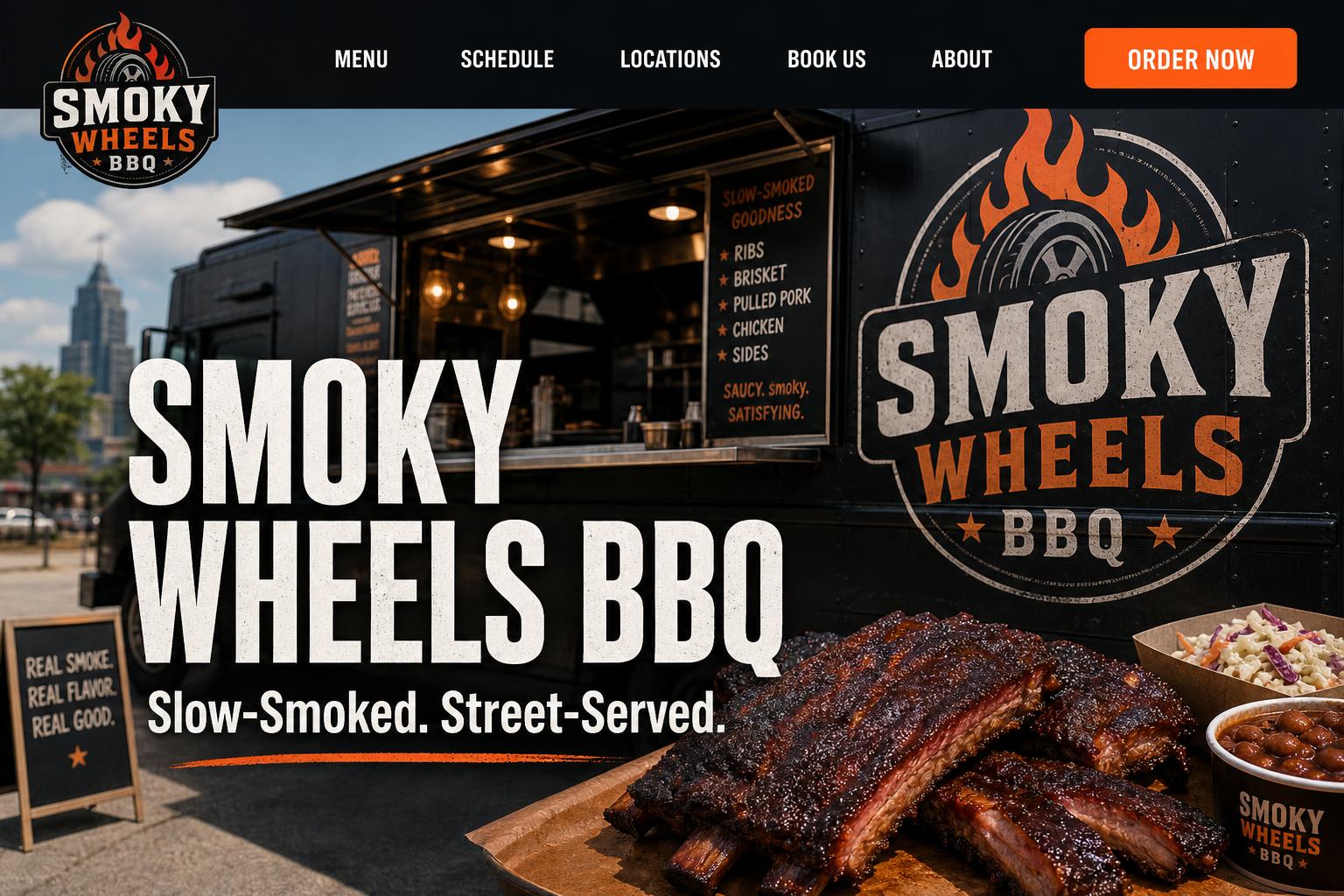
You have three realistic options: a DIY builder like Squarespace or Wix ($16–30/mo, takes a weekend), a ready-made template you can edit (one-time $149 for the Smoky Wheels template), or a custom build by a local designer ($1,200+ flat, launched in about 2 weeks).
How much does a food truck website cost?+
DIY builders run $200–400/year. A purchased template runs $99–199 one-time plus your own hosting (~$10/mo). A custom Starter Site from Bluegrass Digital Forge is $1,200 flat with an optional $49/mo care plan — no monthly lock-ins either way.
How do customers find my truck's location each day?+
The site should have one obvious 'Today / This Week' block on the homepage that you can update in under a minute. We usually wire this to a simple editable schedule so you can update from your phone between stops — no developer needed.
Can I take online orders or accept catering bookings from the site?+
Yes. Online ordering plugs into Square, Toast, or ChowNow. Catering requests are usually a short form that emails you directly — no monthly fee, no third party between you and the lead.
What's the best fundraising or donation page setup for a new food truck?+
For a brand-new truck, a dedicated 'Support Our Launch' page on your own site (linked to Stripe, GoFundMe, or Kickstarter) converts much better than sending people straight to a fundraising platform — they trust your story first, then click through to donate.
Do food truck websites help with SEO and Google Maps?+
A real website is what lets Google connect your Google Business Profile to your menu, photos, and reviews. It's the single biggest factor in showing up for 'food trucks near me' and your city name.
Ready to roll
Let's get your truck a real website.
Starter Sites from $1,200 flat. Two-week launch. No monthly lock-ins.